
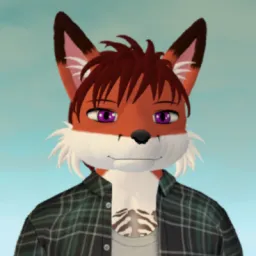
Erik Alessandro Mondrian (he/they) is a writer, visual artist, vocalist, musician, filmmaker, scholar, coder, and longtime explorer of virtual worlds. He holds a BA in French, with a minor in Spanish, from the University of Hawaiʻi at Mānoa; an MA in Communication, with a specialization in Mass Communication and Media Studies, from San Diego State University; and an Interschool MFA in VoiceArts & Creative Writing, with a concentration in Integrated Media, from the California Institute of the Arts. He is currently pursuing a PhD in Media Arts and Technology at the University of California, Santa Barbara, with an MS along the way.


Presentations

23x

Second Life Meets Open Source: Unlocking the Virtual World(s)

You may well have heard of Second Life at some point, the virtual world that launched to the public in mid-2003, but you might be surprised to learn that it's still around, more than two decades later. As a longtime SL Resident, I think that its staying power can be attributed at least partially to the open sourcing of its viewer code (the client software) back in early 2007.

In this presentation, I'll take you through a concise history of Second Life and how it evolved, from its beginnings to the open-sourcing of the viewer and finally to more recent efforts to simplify contributions, with a look at the role of the "third-party viewers" as well (one of these, Firestorm, is vastly more popular these days than the company's official viewer). We'll also examine some of the lessons that Second Life's development might have for other virtual world platforms, starting with related projects like OpenSimulator (and LibreMetaverse) and expanding outward to include the so-called metaverse more broadly.

See Presentation
22x

A Hands-On Introduction to Blender + Python

As a follow-up to my SCaLE 21x FOSS @Home presentation, Creating Terrain Models with Python, Blender, and Second Life, for 22x I will lead a hands-on workshop where people can learn the basics of Blender and how to use Blender's Python API (and embedded interpreter) to create and manipulate 3D graphics at the level of code.

Attendees should ideally come with the latest version of Blender already installed on their computers (just to save time). Some basic familiarity with Python or programming in general is recommended, but not required.

See Presentation
21x

Creating Terrain Models with Python, Blender, and Second Life

As both a longtime Resident of Second Life and someone who is deeply fascinated by the concept of "place" more generally, I wanted to see this world (or parts of it) in a more comprehensive way than the platform's software is able to show. To that end, I've been creating large-scale terrain models of various areas, using a combination of LSL, Python, and Blender.

In this presentation I will go into more detail about the process involved, touching on some of the challenges I've encountered while hopefully also giving attendees a better look at Blender's incredibly powerful Python API.

See Presentation