
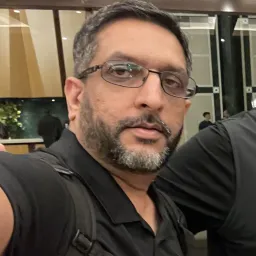
Hamid Akhtar is a Senior Software Engineer at Microsoft, specializing in PostgreSQL internals and large-scale data replication. Over the years, he has worked hands on across various aspects of the PostgreSQL ecosystem, including core database features, extension development, performance, security, and observability.

At Microsoft, Hamid focuses on change data capture (CDC) extension for PostgreSQL for fabric mirroring. Before joining Microsoft, Hamid served as an architect and senior developer across multiple PostgreSQL-focused organizations. His past work includes multi-active (active-active) replication with pgEdge’s Spock, Transparent Data Encryption (TDE), the pg_stat_monitor observability extension, the ORC FDW, and an auto-tuning framework for PostgreSQL. He also led the development and maintenance of the official PostgreSQL installers.

Hamid’s contributions span deep systems engineering, replication internals, extensibility, optimization, and building developer-friendly tools that enrich the PostgreSQL experience.


Presentations

23x

Where Does My INSERT Go? A Logical Replication Story

What really happens to a single INSERT in PostgreSQL once it enters the system? In this talk, we trace the complete lifecycle of one tuple as it travels through PostgreSQL’s logical replication pipeline. Starting at the executor, we watch the tuple become a WAL record, explore what changes when wal_level=logical, and reveal how the logical decoding layer reconstructs row-level changes from low-level WAL fragments. We’ll step through the inner workings of the ReorderBuffer, explain how replication slots guarantee durability, and show how output plugins convert decoded changes into a logical stream ready for subscribers.

On the receiving side, we follow the apply worker as it processes transactions, resolves ordering, handles conflicts, and replays the change into the subscriber database. By the end, you’ll have a clear mental model of each stage—from WAL generation to apply—and a deeper understanding of how PostgreSQL reliably moves data through logical replication.

Whether you run logical replication, build CDC pipelines, or simply want to understand the internals behind one of PostgreSQL’s most powerful features, this talk will give you a guided, intuitive, and highly practical look behind the scenes.

See Presentation
22x

Keeping Your PostgreSQL Replication Healthy: Resolving Conflicts for Optimal Performance

Replication conflicts can disrupt the consistency and reliability of a PostgreSQL database, especially in high-demand environments. This talk focuses on practical steps for monitoring, detecting, and resolving common replication conflicts.

See Presentation
20x

PostgreSQL Replication Conflicts: Avoiding Pitfalls

Experiencing replication conflicts is not too unfamiliar a sight. Whether one experiences replication lag, slots, locks, snapshots, tablespace issues, or other conflicts, establishing a set of best practices along with using proper observability tools will help avoid potential issues. This talk focuses on what to do and what not to in order to avoid database conflicts in streaming replication setups by providing deep insight into how issues are PostgreSQL internals.

See Presentation